
Friction Stir Welding: A Superior Solution for Advanced Metal Fabrication
Key Takeaways
Friction stir welding (FSW) forges solid-state bonds through a rotating tool that generates frictional heat, making it perfect for uniting aluminum and other challenging materials.
This method sharply reduces common problems like warping and thermal distortion that typically arise in traditional welding, resulting in joints that are often stronger than the base materials themselves.
The solid-state bonding characteristic of FSW promotes finer microstructures within weld zones, which significantly enhances mechanical properties like hardness and fatigue resistance.
In high-volume production contexts, friction stir welding brings considerable economic advantages by lowering energy consumption, minimizing waste material, and cutting down on repair cycles compared to conventional welding techniques.
Widely adopted in industries such as aerospace and automotive, FSW’s strength and efficiency contribute to the creation of lightweight and fuel-efficient designs.
Moreover, its flexibility in handling advanced materials, including magnesium alloys and hybrid compositions, paves the way for innovation in product development and functionality.
When selecting a skilled friction stir welding service provider, evaluating their expertise, technology, and material compatibility is crucial for ensuring high-quality outcomes and project success.
Unveiling the Process: How Friction Stir Welding Operates in Metal Fabrication
The Science Behind Friction Stir Welding: Key Principles Explained
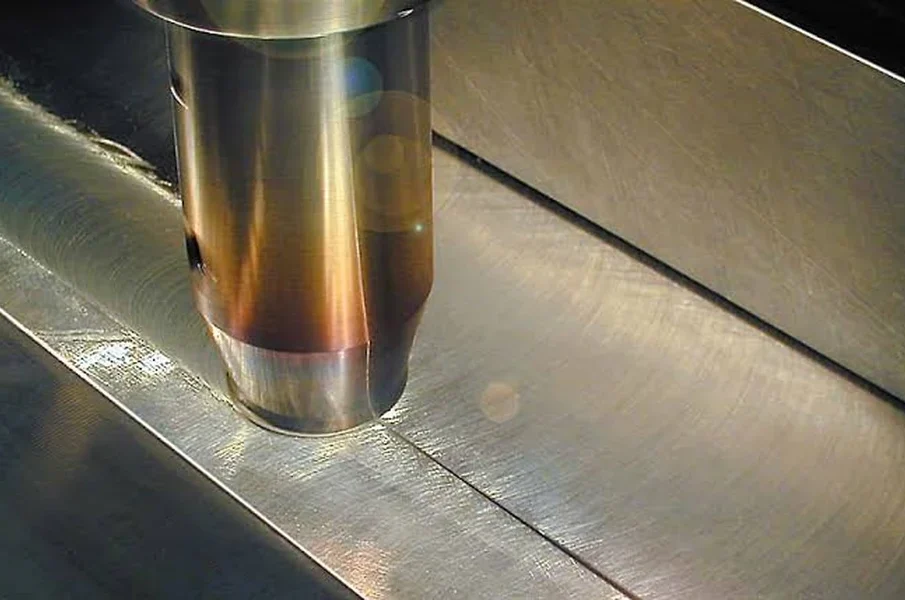
Friction stir welding (FSW) represents a groundbreaking method in metal fabrication. At its essence, this technique utilizes a rotating tool that generates frictional heat, softening the metals engaged without ever reaching melting points. Such an approach establishes a solid-state bond, leading to remarkable strength and endurance in the finished joint. This process proves particularly effective with aluminum and other advanced materials, often considered challenging to weld via traditional techniques.
In contrast to conventional welding, which employs severe heat leading to potential warping and thermal distortion, FSW offers a solution that mitigates these risks. It embodies the notion that sometimes, a less intense method is more effective. A tool inserted into the material at a specific speed and force orchestrates the magic, yielding a joint that frequently exceeds the strength of the base materials involved.
The implications are significant. Research illustrates that the solid-state bonding in FSW nurtures finer microstructures within the weld zone, enhancing overall mechanical properties. This innovative approach is garnering attention across various industries, challenging previously established norms.
Step-by-Step Breakdown of the FSW Process You Need to Know
To fully grasp the friction stir welding process is to demystify the complexities inherent in metal fabrication. Here’s a straightforward breakdown:
- Preparation: Both workpieces need precise alignment in a fixture, and cleaned surfaces are essential for achieving optimal outcomes.
- Tool Insertion: The rotating tool is pressed against the joint line, generating heat through friction.
- Material Softening: As the tool traverses the joint, it softens the material, all without melting it.
- Stirring Phase: The motion of the tool stirs the softened materials, intimately blending them together.
- Cooling and Solidification: Once the tool is withdrawn, the material cools and solidifies, resulting in a robust bond.
Every phase in this intricate metal joining process plays a vital role in achieving the desired results. When compared to traditional methods, FSW’s minimal energy consumption marries efficiency with unmatched effectiveness.
Performance Advantages: Why Choose Friction Stir Welding for Your Projects?
Enhanced Material Strength and Reduced Defects: The FSW Edge
In sectors where precision and reliability take precedence, friction stir welding truly excels. Experts frequently highlight the enhanced material strength and substantial potential for defect reduction as key advantages. Unlike fusion welding, the solid-state bond in FSW eliminates many issues associated with porosity and cracks. It’s particularly transformative in industries like aerospace, where every ounce matters.
Interestingly, the properties achieved via FSW tend to outstrip those obtained through traditional welding methods. Hardness, tensile strength, and fatigue resistance are all substantially improved. This single advantage can significantly contribute to a longer service life and decreased maintenance costs for components.
“Friction Stir Welding can produce higher quality joints than conventional welding processes, making it a leading technology in modern fabrication.”
Moreover, the precision of the welding process translates into lower energy costs, solidifying its position as a preferred option for manufacturers and engineers alike. The reduced need for post-weld treatments further bolsters the case for implementing FSW in large-scale operations.
Cost-Effectiveness in High-Volume Production: Real-World Examples
Examining the advantages of friction stir welding without acknowledging its economic benefits tied to high-volume production would be a mistake. Companies adopting FSW often experience lower operational costs, thanks to a blend of reduced energy usage, less scrap material, and lower rework rates.
- Reduced Energy Costs: Typically, this process requires less energy than conventional welding methods.
- Less Scrap Generation: FSW results in minimal waste material during the joining process.
- Fewer Repairs Needed: Strong and defect-free welds mean fewer repair cycles are necessary, prolonging product life.
Take, for instance, an automotive manufacturer that transitioned to FSW for assembling lightweight components. They observed not only performance enhancements but also significant savings-in both time and material costs. These success stories demonstrate that clinging to outdated methods risks missing out on efficiency and innovation.
Applications of Friction Stir Welding: Industries Benefiting from FSW Solutions
From Aerospace to Automotive: FSW in Action Across Sectors
The wide-ranging applicability of friction stir welding is apparent across a host of industries. Early adopters like automotive and aerospace sectors embraced this cutting-edge welding process to meet stringent performance criteria.
- Aerospace: The lightweight nature of aluminum coupled with high strength makes FSW ideal for aircraft components.
- Automotive: FSW is employed in the production of fuel-efficient vehicles, boosting structural integrity without adding weight.
- Marine: FSW provides solutions for shipbuilding, creating reliable joints in aluminum hulls.
Furthermore, railway and infrastructure projects are beginning to recognize the extraordinary potential of FSW in joining heavy components with unparalleled durability.
Innovative Uses of Friction Stir Welding in Advanced Materials
Industries are evolving, and so are the materials used. The adaptability of friction stir welding to advanced materials opens new horizons. It extends beyond just aluminum; researchers are pushing into magnesium alloys and disparate materials. This capability to unite various components-without sacrificing quality-often results in the creation of hybrid materials that greatly enhance performance attributes.
Professionals assert that leveraging FSW can spur innovations in design and function. This trend indicates that creative combinations can yield superior products-characterized by lighter weights, enhanced strength, and greater fuel efficiency.
“Friction Stir Welding is paving the way for the next generation of high-performance materials.”
These innovative applications motivate companies to lead the way in integrating FSW into fresh projects, reshaping how products are conceived and brought to fruition.
Choosing the Right Partner: What to Look for in Friction Stir Welding Services
Essential Criteria for Selecting a High-Quality FSW Service Provider
With the stakes set high, identifying the right friction stir welding service provider can significantly influence project outcomes. Several key criteria should be evaluated:
- Experience and Expertise: Seek providers with a proven history in FSW.
- Technology Investment: Confirm they employ the latest tools and technology to achieve optimal results.
- Material Compatibility: Their experience with relevant materials for your project is essential.
A competent partner makes a notable difference, affecting everything from the initial consultation to final delivery and overall project success. Their skills and knowledge ultimately influence weld quality and performance.
Understanding Project Expectations: What Clients Typically Experience
Clients can look forward to a friction stir welding process that unfolds as a collaborative journey. Communication remains paramount from start to finish, aiding in clarifying objectives and timelines. Generally, clients value the following aspects:
- Transparency: Consistent updates and the opportunity to review project milestones help build trust.
- High-Quality Output: Clients expect a weld that meets or surpasses industry standards.
- Post-Weld Support: Adequate support after the welding process is critical for addressing any subsequent requirements.
With the right partner, clients often find themselves not just satisfied with the final product but pleasantly surprised by unexpected enhancements and efficiency boosts. A thorough grasp of processes and clear expectations turns friction stir welding into a strategic advantage in the metal fabrication arena.
FAQ
What are the safety considerations when using friction stir welding?
Safety remains a top priority in any welding endeavor. Friction stir welding mandates proper training and protective gear since the equipment operates at high speeds and generates substantial heat. Following established safety protocols significantly reduces risks linked to equipment operation, ensuring a safe work environment.
How does friction stir welding compare to other welding methods in terms of environmental impact?
Often regarded as a more eco-friendly alternative, friction stir welding reduces energy consumption and material waste compared to traditional methods. Its solid-state bonding results in fewer emitted pollutants, making it a choice for manufacturers committed to sustainability.
Can friction stir welding be used on non-metal materials?
While primarily focused on metals, research is underway to explore friction stir welding’s potential applications with certain non-metal composites. However, its effectiveness hinges on the materials involved. Currently, attention primarily remains on metals such as aluminum and magnesium, but future advancements might reveal new opportunities as technology progresses.
What types of industries are increasingly adopting friction stir welding techniques?
Beyond just aerospace and automotive, a growing number of industries are embracing the advantages offered by friction stir welding. The marine, railway, and infrastructure sectors are integrating this technique, thanks to its robustness and efficiency. As awareness spreads, an increasing variety of sectors is expected to adopt FSW to leverage its benefits.
Is friction stir welding suitable for small-scale projects?
Although friction stir welding excels in high-volume production, it proves adaptable for smaller projects too. Clients can still reap its benefits through efficiency and reduced defect rates, making it a valuable option even for small-scale applications where precision and quality are pivotal.
What advancements are being made in friction stir welding technology?
Technological breakthroughs in friction stir welding involve improved tool designs and automation that heighten accuracy and processing speed. Ongoing research is pushing the envelope, enabling shorter processing times and better compatibility with advanced materials, which broadens its application range.
How does one evaluate the cost-effectiveness of using friction stir welding?
To gauge cost-effectiveness, clients should analyze not only initial setup expenses but also long-term savings stemming from decreased energy use, minimal waste, and lower repair necessities. Weighing these factors against traditional methods often reveals FSW’s potential for significant overall cost savings.
What role does training play in the successful implementation of friction stir welding?
Training is vital for the effective implementation of friction stir welding. Skilled operators are crucial in attaining optimal results. Thorough training ensures that personnel comprehend the nuances of the process, ultimately leading to higher-quality joints and fewer errors in production.
Useful Resources


